 en
en  CN
CN ES
ES PT
PT SV
SV DE
DE TR
TR FR
FR PL
PL RO
RO RU
RU IW
IW ID
ID LV
LV LT
LT SR
SR SK
SK SL
SL UK
UK VI
VI SQ
SQ ET
ET GL
GL HU
HU MT
MT
Definition of digital dentistry
Digital dentistry encompasses the use of computer-based tools and software solutions in dental practices to enhance treatment delivery. It introduces new possibilities, such as digital scanning, which enables dentists to perform tasks like impressions and diagnostics without traditional mechanical tools. In dental labs, digital solutions like impression scanners and design software accelerate the creation of dental products and reduce manual labor.
The roots of digital dentistry trace back to 1984 when French dentist Dr. Francois Duret pioneered the application of CAD/CAM principles for dental impression taking. Since then, dental professionals worldwide have developed and patented numerous digital dental solutions to optimize treatment processes. However, despite these innovations, the adoption of digital technology in dentistry has been gradual. Recent market research indicates that approximately 85% of dental clinics globally still rely on conventional impression-taking methods with trays.
Utilization of Intraoral Scanners
Intraoral scanners are handheld devices used in dentistry to capture highly detailed 3D images of a patient's teeth and oral structures. These scanners have revolutionized the process of impression-taking by eliminating the need for traditional, messy materials like impression trays and putty. Instead, intraoral scanners use optical scanning technology to create digital impressions quickly and comfortably for patients.
Benefits of intraoral scanners in dental lab practice
·Improved accuracy in impressions: Intraoral scanners provide highly precise digital impressions of a patient's dentition and oral structures. Compared to traditional impression materials, digital impressions captured by intraoral scanners offer superior accuracy, reducing the likelihood of errors and inaccuracies in the fabrication of dental restorations.
·Enhanced efficiency and time-saving: Intraoral scanners streamline the impression-taking process, significantly reducing the time required to capture impressions compared to traditional methods. Digital impressions can be obtained quickly and easily, minimizing chair time for both patients and dental professionals. This increased efficiency allows dental labs to produce restorations more promptly, leading to faster turnaround times and improved patient satisfaction.
·Better patient comfort and experience: Digital impressions taken with intraoral scanners offer a more comfortable and pleasant experience for patients. Unlike traditional impression materials, which can be messy, uncomfortable, and induce gagging, intraoral scanners use non-invasive optical scanning technology that eliminates the need for physical impressions. This results in a more comfortable and relaxed patient experience, contributing to overall satisfaction with dental treatment.
·Integration of CAD/CAM Technology: Digital impressions captured by intraoral scanners seamlessly integrate with computer-aided design/computer-aided manufacturing (CAD/CAM) technology in dental lab practice. These digital impressions serve as the foundation for designing and fabricating dental restorations such as crowns, bridges, and veneers. By digitizing the impression process, intraoral scanners enable precise customization and virtual design of restorations, leading to improved accuracy and aesthetics of the final products.
Role of CAD/CAM in dental lab practice
CAD/CAM technology plays a crucial role in dental lab practice by enabling the virtual design, precise fabrication, and efficient production of dental restorations. Its integration into digital workflows enhances accuracy, consistency, and productivity, ultimately leading to improved patient outcomes and satisfaction in modern dental practice.
Streamlined Communication and Workflow
Streamlined communication and workflow facilitated by digital technologies enhance efficiency, collaboration, and patient care in dental practice. By integrating digital systems and tools into daily workflows, dental teams can optimize practice operations, improve treatment outcomes, and enhance the patient experience.
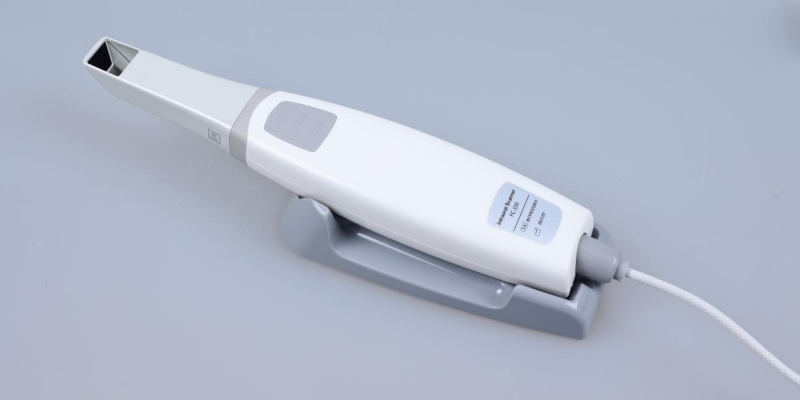
Bloomden Intraoral Scanner FC-100
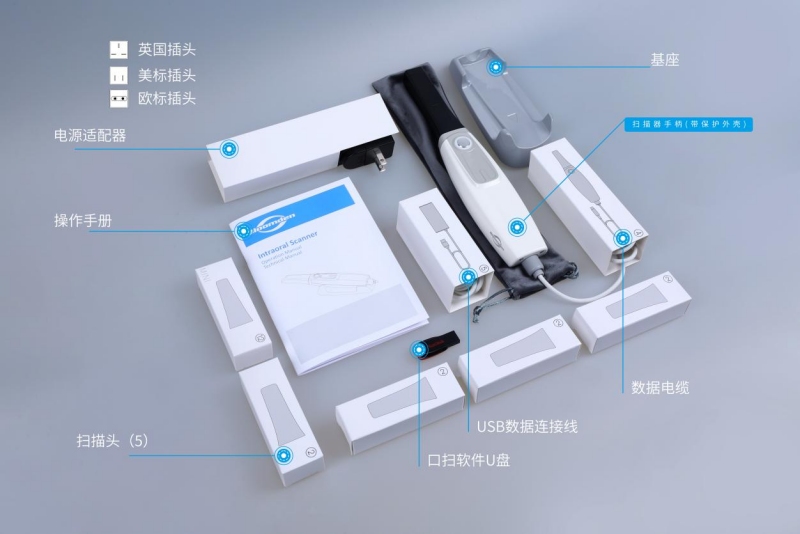
Product Features
·AI intelligent scanning
·Fashionable & Lightweight
·Powerful circuit cooling system
·Clear margin line, high accuracy
·Fast scanning speed, easy to learn and use
·2 Different tips, meet more demands of different applications
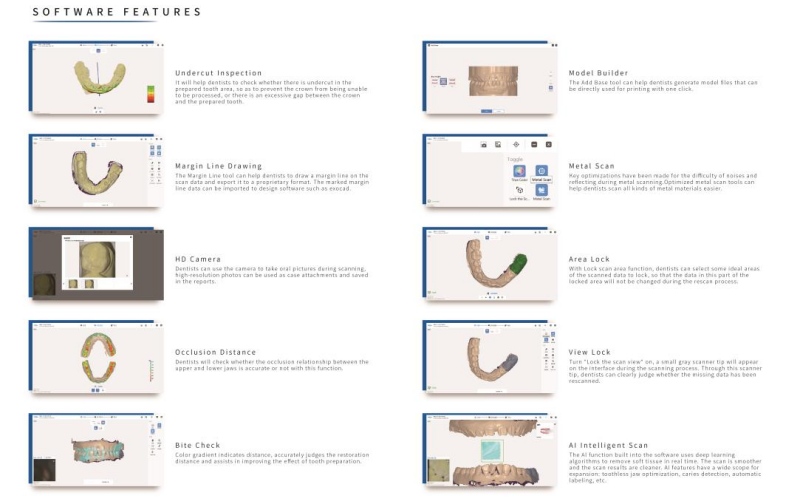
Software Features
Bloomden Bioceramics(Hunan) Co., Ltd. (hereinafter referred to as Bloomden) is located in Changsha, Hunan.