 en
en  CN
CN ES
ES PT
PT SV
SV DE
DE TR
TR FR
FR PL
PL RO
RO RU
RU IW
IW ID
ID LV
LV LT
LT SR
SR SK
SK SL
SL UK
UK VI
VI SQ
SQ ET
ET GL
GL HU
HU MT
MT
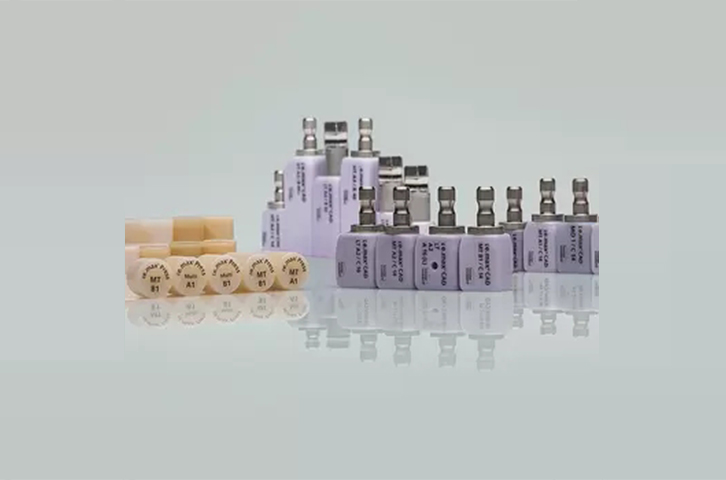
Fabricating Restorations with Press Ingots and CAD Blocks
In the past, enamel replacement was accomplished by using ingots or blocks with higher values and opacities for cutback and layering. This clever symbiotic relationship of monolithic pressing and microlayering can now be applied to the fabrication of restorations.
The purpose of this study was to determine the effect of pressed and cad cam block translucency on fracture toughness (KIC). According to their translucency, pressed ingots were divided into four subgroups: HT-A3, MT-A3, LT-A3, and MO-A2.
Translucency
The amount of light that can pass through an object and reflect or absorb back from the objects behind it is defined as its translucency. The greater the level of translucency, the more visible the object. Transparency is an important factor in the esthetics of ceramic materials.
The degree of translucency is determined by the porosity of the material and the particle size. Smaller particles scatter less light and have higher translucency, whereas larger particles scatter more light and have lower translucency. Furthermore, the porosity of the layering porcelain may affect translucency.
The mean (TP) values of each group of veneering techniques were measured before and after aging in this study. The results revealed that high translucency groups had the highest mean value before aging and low translucency groups had the lowest mean value after aging. The differences between the two groups, however, were statistically insignificant.
The means of the translucencies were lower with the build up technique than with the other techniques, but higher with pressing and CAD/CAM. The mean values for techniques were significantly different from one another. Similarly, before aging, the mean (TP) values for the HT technique were significantly lower than those for the other techniques, but after aging, the mean values were not statistically different.
The MT ingot is best suited for applications that require the same brightness as an HT ingot but with less chroma. Because of their balanced relationship between brightness and translucency, MT ingots are also used in cases where enamel-like optical properties are required.
The ceramist can create the most aesthetically pleasing shade for their patient's needs by using MT ingots and GC LiSi veneering porcelains. The MT ingot has a good balance of opacity and transparency, and its translucency range is broad enough to allow for creative customization.
Despite the fact that transparency has been shown to be beneficial in many applications, the pursuit of greater transparency can be difficult. Governments, for example, may be tempted to make their citizens more transparent in order to boost trust in government policies. However, pursuing transparency may expose citizens who have been secretly monitored or have become targets of political repression.
Chromaticity
Chromaticity is the ability of a light source to accurately render the colors it emits. This is especially important in applications that require a precise color output, such as transportation and lighting.
Chromaticity refers to how different wavelengths of light produced by a light source contribute to color perception. A white LED light with a phosphor-generated peak of green to red wavelengths and a blue wave from a semiconductor chip will not contribute as much chromaticity to color perception as an incandescent bulb, which essentially combines the entire visible light spectrum into a single beam of light.
The CIE 1931 x,y chromaticity diagram, which uses x,y coordinates to plot a horseshoe-shaped border around the entire experimentally determined spectrum locus, is the most widely recognized chromaticity diagram. This border's equal energy "white" is located in the center.
This diagram is useful for identifying chromaticities as saturation increases, but it can be perplexing to many people. It also contains a confusion line that passes through equal energy white and indicates which monochromatic lights (neutral point) can completely match this line, so that chromaticity to the left of the line is "yellow" and chromaticity to the right of the line is "blue."
The CIE 1976 u',v' chromaticity diagram is a newer chromaticity diagram that uses u',v' coordinates to more closely align distances with perceived differences in color appearance. The chromaticity coordinates are scaled so that small perceived differences correspond to short lines and large perceived differences correspond to long lines.
The CIE also defines correlated color temperature, or CCT, in addition to the chromaticity diagram. The extent to which the output of a light source matches that of a reference illuminant is referred to as the CIE color gamut.
Another important concept to grasp is the distinction between chromaticity and color. They are very similar, but the former is more psychophysically based and can be used to explain concepts as diverse as how smartphone users respond to different colors on their screens at different times of day or why some children develop nearsightedness while others do not.
Fluorescence
Fluorescence is a type of luminescence that occurs when molecules are excited by an external source and emit photons. This is a physical process that takes place on very short time scales. Fluorescence occurs when a molecule absorbs photons and then emits photons with a different wavelength than the photons absorbed (Figure 1).
This phenomenon has numerous applications, including analytical techniques for monitoring water quality. Proteins, chlorophylls, and natural pigments are some of the most common fluorescent samples. Fluorescent compounds are also created by semiconductors and phosphors.
The excitation of a molecule by a high energy laser beam is another common example of fluorescence. The molecule absorbs the laser radiation and then goes through a series of energetic transitions, resulting in what is known as a transient excited state. This transition involves moving an electron from a higher to a lower electronic state, where it can relax to a ground state and then emit a photon with a longer wavelength than the original absorbed photon.
It's possible that some of the energy transferred to the excited molecule was lost due to nonradiative processes like collisions with other molecules or temperature changes, which can reduce fluorescence intensity. These processes are known as nonradiative relaxation or internal conversion, and they are visible as the formation of a fluorescence peak in Figure 2.
The molecule may not reach an intermediate electronic state in some cases. Instead, it decays to a lower vibrational energy level and enters a singlet state. The molecule can then relax even further to its ground state and emit a photon with less energy than the absorbed photon.
This is similar to the emission of a phosphor when it receives an external energy source, but the glow lasts much longer and does not stop immediately when the energy source is removed. This is known as phosphorescence, and phosphorus is the best example.
Fluorescence can be measured using expensive laboratory spectrophotometers and has grown in popularity for real-time measurements in the field. Spectrometers scan across a range of excitation and emission wavelength pairs in a fraction of a second, providing quick, reliable measurements. The spectrometer produces an Excitation Emission Matrix (EMM).
Value
Value is a broad concept that includes many different aspects such as material goods, services, and labor (wages). It is the monetary value of the goods or services that people purchase in markets. It is the value that people place on goods and services that they receive or produce as a result of their actions and decisions.
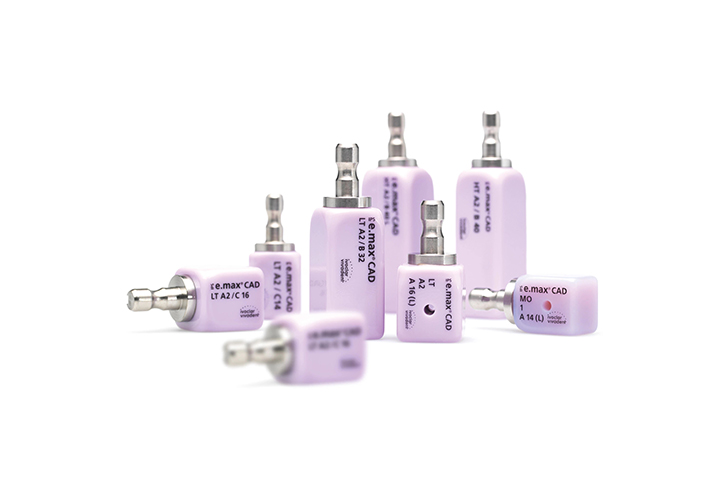
Press ingots and CAD blocks are lithium disilicate ceramic materials produced through lost wax hot pressing or CAD/CAM milling. Both methods yield an amorphous lithium disilicate that is blue in color and soft, making it easy to mill without causing excessive bur wear. The flexural strength of the amorphous material is approximately 130 MPa, but this strength may vary depending on the amount of crystallization that occurred during the manufacturing process.
When heated in a lost wax hot press, the amorphous material becomes viscous and pressable, whereas when pressed in a CAD/CAM machine, the amorphous material partially crystallizes and exhibits an intermediate status (Li 2 SiO 3 ). It has a high flexural strength, but it varies depending on how much crystallization occurred during the manufacturing process.
A study on IPS e.max press ingots and CAD blocks revealed that the amorphous material is softer and more malleable than the crystallized material. This allows for more precise material manipulation during milling and machining procedures. The amorphous material was also found to be more fracture resistant than the crystallized material.
This is primarily because the amorphous material is not as dense and stiff as the crystallized material, which prevents it from cracking and breaking when the restoration is weakened or stressed. This enables the dentist to use a larger margin for coping, which is important because it reduces the possibility of breakage during treatment and improves the patient's comfort.
Furthermore, the amorphous material is more stain resistant than the crystallized material, which is beneficial for patients who are not happy with the dark appearance of their teeth. This is especially useful in denture whitening and orthodontics, where bleaching may not be effective.
Table of Contents
Bloomden Bioceramics(Hunan) Co., Ltd. (hereinafter referred to as Bloomden) is located in Changsha, Hunan.