 en
en  CN
CN ES
ES PT
PT SV
SV DE
DE TR
TR FR
FR PL
PL RO
RO RU
RU IW
IW ID
ID LV
LV LT
LT SR
SR SK
SK SL
SL UK
UK VI
VI SQ
SQ ET
ET GL
GL HU
HU MT
MT
Instruction
In the realm of restorative dentistry, the pursuit of both strength and beauty is paramount. Thanks to advancements in dental materials, dental professionals now have access to a remarkable material known as dental zirconia. Among the leading innovators in this field is Bloomden, a manufacturer that has been at the forefront of producing high-quality dental zirconia blocks. This article explores how Bloomden Dental Zirconia Blocks are redefining restorative dentistry with their unparalleled strength and beauty.
Bloomden Zirconia Technology
1.Powder Production: The production of zirconia begins with the synthesis of zirconia powder. The main raw material used is zirconium oxide, which is derived from zircon sand, a naturally occurring mineral. The zircon sand undergoes a series of chemical and thermal processes to convert it into zirconia powder. These processes may include grinding, calcination, purification, and milling, resulting in a fine and pure zirconia powder.
2.Stabilization Process: To enhance the mechanical properties and stability of zirconia, a stabilizing agent is added. The most commonly used stabilizer is yttria (yttrium oxide). The zirconia powder is mixed with a precise amount of yttria, typically around 3-5% by weight. This stabilization process prevents the transformation of zirconia into its monoclinic phase, ensuring the material remains in its desired tetragonal or cubic phase.
3.Forming Techniques: Once the zirconia powder is stabilized, it can be shaped into various forms for different dental applications. The two main forming techniques used in zirconia production are:
a. Uniaxial Pressing: This technique involves compressing the zirconia powder into a desired shape using a uniaxial press. Pressure is applied to the powder within a die, creating a compacted shape.
b. Isostatic Pressing: In this technique, the zirconia powder is placed within a flexible mold, which is then subjected to high-pressure fluids to uniformly compress the powder from all directions. Isostatic pressing helps to achieve higher density and uniformity in the formed zirconia products.
4.Sintering Process: After the zirconia powder is formed into the desired shape, it undergoes a sintering process. Sintering involves heating the formed zirconia at high temperatures, typically between 1350-1550°C (2462-2822°F). During sintering, the zirconia particles bond together, resulting in a dense and solid material with enhanced mechanical properties. The sintering process also allows for the adjustment of the final translucency and strength of the zirconia material.
5.Machining and Finishing: Once the zirconia material is fully sintered, it can be machined and finished to achieve the desired final shape and surface characteristics. CAD/CAM milling machines are commonly used to precisely mill the sintered zirconia blocks, creating restorations with excellent marginal fit and surface details. The milled zirconia restorations may undergo additional processes such as polishing, staining, and glazing to enhance their esthetic appearance.
6.Quality Control: Throughout the production process, strict quality control measures are implemented to ensure the consistency, reliability, and safety of the zirconia products. Quality control includes rigorous testing of the raw materials, monitoring the production parameters, and conducting quality checks on the finished zirconia products. Compliance with international standards and regulations is essential to ensure the highest quality standards are met.
Bloomden Latest Zirconia Cases
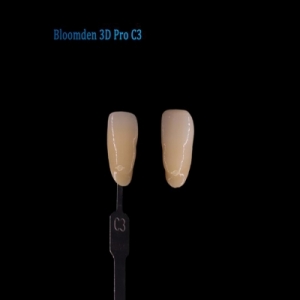
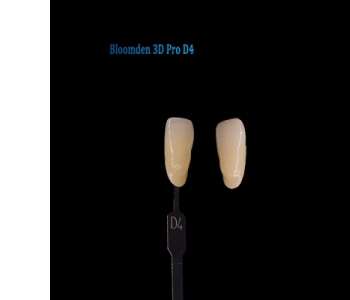
3D-Pro-ML C3 3D-Pro-ML D4
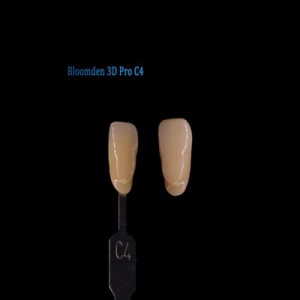
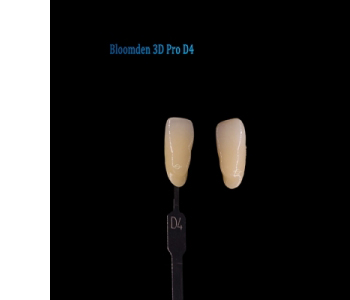
3D-Pro-ML C4 3D-Pro-ML D4
Advantages of Bloomden Zirconia Material
1.High Bending Strength: Zirconia possesses remarkable mechanical properties, including high bending strength. Flexural strength refers to the material's ability to withstand bending or deformation without breaking. Dental zirconia exhibits a high bending strength, making it an ideal choice for fabricating dental restorations that can withstand the functional forces of the oral cavity.
2.Biocompatibility: Zirconia is highly biocompatible, meaning it is well-tolerated by the body's tissues and does not cause adverse reactions. This biocompatibility makes zirconia a safe and suitable material for use in dental restorations. Patients can enjoy the benefits of zirconia restorations without concerns about allergic reactions or tissue irritation.
3.CAD/CAM Milling: Zirconia technology has been seamlessly integrated with computer-aided design and computer-aided manufacturing (CAD/CAM) systems. Dental professionals can digitally design restorations using 3D software and then use CAD/CAM milling machines to precisely mill zirconia blocks into the desired shape and size. This technology allows for highly accurate and customized restorations with minimal manual intervention.
4.Translucency and Shade Selection: Dental zirconia has evolved to offer varying degrees of translucency, allowing for restorations that closely resemble the natural appearance of teeth. Advances in zirconia technology have led to the development of highly translucent zirconia materials, enabling dental professionals to create restorations that exhibit natural vitality and esthetics. Additionally, zirconia manufacturers offer a wide range of shades, allowing for precise color matching and customization to match the patient's natural dentition.
5.Monolithic Restorations: Zirconia technology has facilitated the development of monolithic restorations, where the entire restoration is fabricated from a single block of zirconia. Monolithic restorations eliminate the need for a metal substructure, enhancing the strength and durability of the restoration while maintaining an esthetically pleasing appearance. This monolithic construction ensures restorations that are resistant to chipping and fracture, offering longevity and reliability.
6.Digital Shade Mapping: Digital shade mapping technology has further enhanced zirconia technology by allowing for precise color matching and shade selection. Dental professionals can use digital shade-matching devices to accurately capture the color of the patient's natural teeth, ensuring a seamless integration of the zirconia restoration with the surrounding dentition. This technology improves the esthetic outcome and patient satisfaction.
7.Customization and Layering: Zirconia technology offers customization options, allowing dental professionals to tailor the characteristics of the restoration to individual patient needs. This includes customization of the translucency, shade, and even the layering of zirconia materials to mimic the natural gradient of color and translucency found in natural teeth. Such customization ensures restorations that blend harmoniously with the patient's existing dentition.
If you are interested in our zirconia materials, contact us!
Bloomden Bioceramics(Hunan) Co., Ltd. (hereinafter referred to as Bloomden) is located in Changsha, Hunan.